

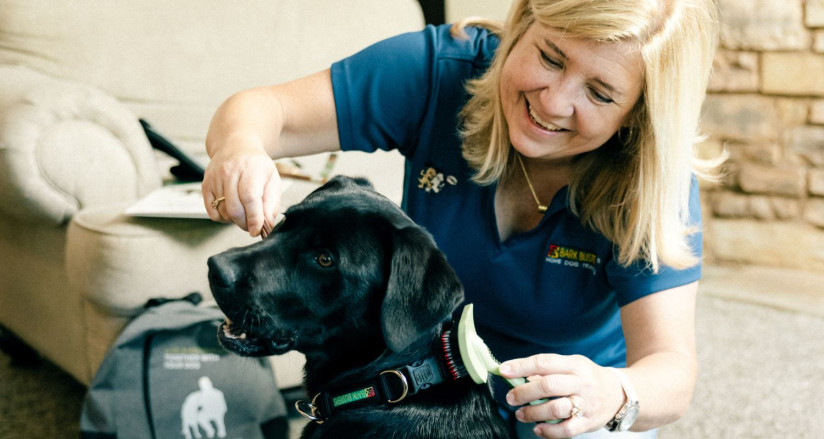
Summary: This guide helps dog owners build their dog’s comfort with handling, reducing stress and anxiety during grooming, vet visits, and everyday care through positive, at-home training techniques.
Bark Busters' Key Points:
- Practice gentle handling daily, including ears, paws, tail, mouth, and belly, to normalize touch.
- Use grooming activities—brushing, bathing, nail trimming, and dental care—as opportunities for handling practice.
- Reduce vet visit stress with calm office visits, fun car trips, and pre-appointment activity.
- Reward your dog after grooming or vet visits to create positive associations.
- For anxious or reactive dogs, a Bark Busters trainer can provide personalized guidance for calm, stress-free handling.
Every dog should feel comfortable being handled. From vet exams to grooming appointments, your dog will be touched, lifted, and examined by people outside your family—and how they respond depends largely on the preparation you do at home.
By practicing gentle, positive handling exercises at home, you can reduce your dog’s stress, prevent anxiety, and make vet visits and grooming appointments calmer, safer, and more successful.
Build Comfort with Handling at Home
Building your dog’s comfort with handling requires patience and consistency. Start by introducing handling in a calm, distraction-free environment. Gently touch your dog’s ears, paws, tail, mouth, and belly—just as a vet or groomer would. Keep sessions short. Always praise and reward calm, cooperative behavior to reinforce positive experiences. Stay relaxed during handling sessions, as excessive reassurance can actually increase anxiety.
Make this a part of daily life—check their paws after walks, lift their lips to look at teeth, or touch their tail while they’re resting. The more normal handling feels at home, the easier it will be to accept it from others.
Use Grooming as Handling Practice
Grooming at home isn’t just about keeping your dog looking good, it’s essential for their health and comfort and an ideal way to help them become comfortable with handling. Here are some tips for grooming at home:
Dog Brushing Tips for Healthy Coats
Choose the right brush; a rake for long-haired breeds, and a bristle brush for short- haired ones. Start with short sessions, brushing in the direction of the fur. Frequency depends on the breed, ranging from daily to weekly.
How to Bathe Your Dog at Home
Use lukewarm water and a dog-specific shampoo. Brush your dog first to remove loose fur and prevent matting. Gently massage shampoo into coat, and rinse well. Most dogs need a bath every 4-8 weeks, depending on activity level and coat type.
Dog Nail Trimming Tips
Introduce the clippers or grinder slowly, letting your dog sniff and investigate. Trim just a small amount at a time to avoid hitting the sensitive “quick.” If you’re unsure, ask a vet or groomer to demonstrate safe trimming.
Dog Dental Care and Teeth Brushing
Use dog-safe toothpaste and a soft toothbrush. Start slow and let your dog chew on the brush, then work up to brushing a few teeth at a time. Aim to brush their teeth daily or at least several times a week.
Don’t forget to reward your dog after each activity to keep the experience positive. Every grooming step doubles as handling practice, helping your dog stay relaxed during professional grooming sessions.
How to Prepare for a Vet Visit
Vet visits can be overwhelming for dogs, but early handling practice makes them less intimidating. Here are some ways to prepare for a vet visit:
Before the Appointment
- Visit in advance. Take your dog to the vet’s office during a quiet time just to explore. Let them sniff around, meet staff, and receive a treat. This helps create positive associations with the space.
- Create positive car ride experiences. If your dog only rides in the car to go to the vet, they may associate it with stress. Take them on fun car trips to break that connection and make travel a more positive experience.
- Exercise first. Give your dog physical and mental stimulation before the appointment. A tired dog is more likely to stay calm.
During the Appointment
- Stay calm. Your dog will mirror your behavior.
- Keep them on a short leash to avoid conflicts in the waiting room.
- Use a carrier for small dogs, adding a familiar blanket or toy to increase their sense of security.
- A well-fitted muzzle may be needed for aggression or anxiety. Consult your trainer about how to introduce a muzzle to your dog.
These tips can help your dog stay calmer and more comfortable at professional grooming, vet, or daycare drop-off appointments.
Reward Your Dog to Create Positive Experiences
After vet or grooming appointments, praise your dog and follow up with something they love—whether it’s a walk, a game, or a favorite treat. Over time, your dog will learn that being handled by others leads to good things.
If your dog is anxious or reactive, a Bark Busters trainer can help teach calm, positive handling for vet visits, grooming, and everyday care. Contact your local Bark Busters trainer for more tips and advice.
