

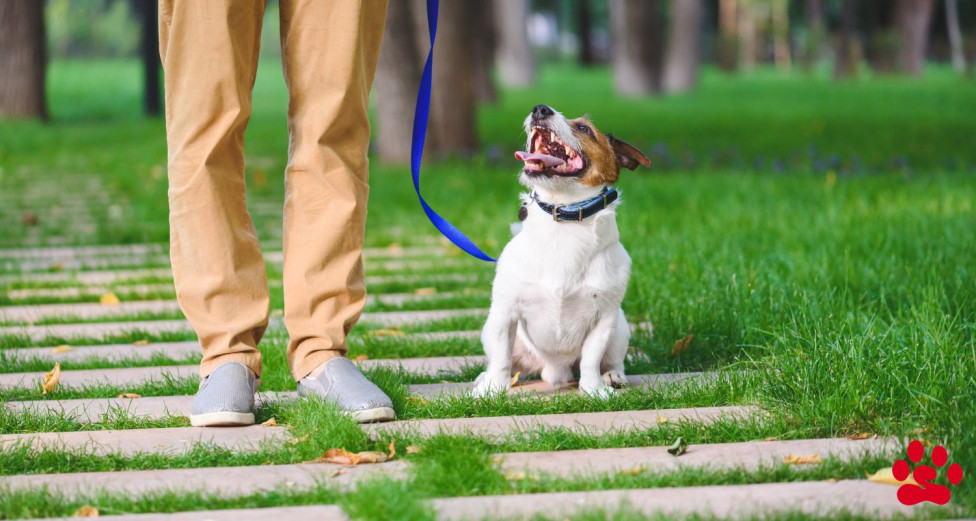
If you’ve ever walked your dog down Orange Park’s trails or through downtown Daly City and thought, “Why is this so much harder than everyone makes it look?”—you’re not alone.
Balancing work, life, and dog ownership in Silicon Valley is already a juggling act. Add a dog that pulls like a start-up founder racing toward a Series A pitch, and you’ve got a recipe for frustration.
Leash training challenges are normal. And much more solvable than most people think.
We asked our local San Mateo dog therapist, Jared Levenson, for his thoughts on why leash walking becomes such a struggle, and how to turn it around with calm, natural communication dogs understand.
Why Leash Training Feels So Hard in Daly City
Our neighborhoods are full of distractions. Scooters drifting by. Families with strollers. Dogs behind fences recruiting your dog into their daily bark-a-thon. And yes—the occasional delivery robot creeping down the sidewalk like a self-driving toaster. It’s a lot for a dog to take in.
Most leash pulling or zig-zagging isn’t “bad behavior.” It’s simply a dog trying to manage the world without clear guidance. Without leadership, they feel responsible for the walk, and they make choices based on instinct, not manners.
The Real Reason Dogs Struggle on Leash
No dog is born knowing how to walk politely in a straight line. They’re curious. They explore. They move at their own pace. And in places like Daly City, Burlingame, or San Mateo, dogs are overwhelmed with smells, movement, and sounds.
If your dog is leading the walk, it’s not a sign of dominance—it’s a sign that communication isn’t fully established yet.
Once your dog understands your leadership, everything shifts. Their brain settles. Their choices soften. Their pace matches yours. You become their reference point instead of everything else around them.
A Leadership-Based, Treat-Minimal Approach That Actually Works
The Bay Area loves treats. And look—we love rewarding dogs too. But treats alone rarely fix leash training. They can become a bit like using your phone for every minor task. Convenient, sure. But what happens when the battery dies?
If your dog only listens when you have food, you don’t yet have communication. You have a transaction.
At Bark Busters, we use a dog’s natural communication system—tone of voice, body language, timing. It’s gentle, intuitive, and doesn’t rely on external rewards or harsh punishment.
Leadership isn’t about force. It’s about clarity. When you communicate in a way your dog instinctively understands, treats become optional instead of essential—and your dog begins choosing calm behavior on their own.
Practical Steps to Improve Leash Training at Home First
This is the step most people skip. They go straight outside, where the world is loud, fast, and stimulating.
But true leash training starts inside your home, where your dog can actually listen. A few foundational habits make a huge difference:
- Practice walking beside you in the living room first
- Reinforce calm before stepping out the front door
- Build responsiveness to your voice and pace
- Use pauses and direction changes to keep focus gentle and natural
Home is where your dog learns the communication and leadership that will later hold up at Seal Point Park, Coyote Point, or anywhere you walk together. Inside success leads to outside success.
Local Dog Trainer Insights from Jared Levenson
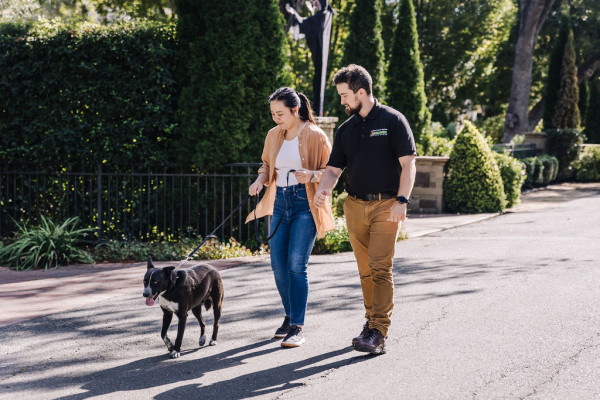
Jared understands leash frustration deeply. Raised on a Sacramento farmhouse surrounded by animals—one dog, thirteen cats, five sheep, and even a pair of goldfish—he grew up watching how animals communicate naturally.
Later, working as a behavioral therapist with autistic children at Easter Seals, then teaching yoga for years, Jared developed a calm presence that dogs respond to almost instantly. With a Master’s in Counseling Psychology from Santa Clara University and experience as a mental health counselor in Half Moon Bay, he brings a remarkable mix of emotional-awareness and canine communication to every session.
If you’ve seen his lengthy five-star reviews on Google, Thumbtack, or Yelp, you’ll notice a theme: “Our dog instantly relaxed around Jared.” “He explains things in a way that finally makes sense.” “The walks are completely different now.”
That calm confidence is what leash training requires—especially on the lively sidewalks of San Mateo County.
Common Leash Training Mistakes Most Silicon Valley Owners Make
Walking your dog while thinking about Slack notifications and AI breakthroughs doesn’t help, but the bigger mistakes are simpler. A few patterns show up repeatedly:
- Starting leash training outside before communication is set
- Using treats to lure behavior instead of teaching behavior
- Allowing inconsistent boundaries from one walk to the next
- Tensing up on the leash, which accidentally sends “worry” signals
Most owners are doing their best—it’s just that dogs don’t understand human logic. They understand tone, timing, and leadership. Once owners shift into calm, confident communication, dogs shift too.
What Effective Leash Training Looks Like with Bark Busters
A Bark Busters leash lesson doesn’t begin on the sidewalk. It begins in your living room. We focus on:
- Your dog’s unique patterns
- Your communication style
- How your dog perceives leadership
- How to establish clarity and calm before stepping outside
Results often come quickly. Not because of shortcuts, but because dogs instantly relax when instinctive communication replaces confusion.
And with our Life of Dog Support Guarantee available through our Gold Service, you have unlimited help if you ever need a refresher—whether next month, next year, or after a move.
Walk Forward with More Ease, Confidence, and Connection
You don’t have to keep struggling through chaotic walks or wondering why your dog behaves perfectly at home but turns into a furry Tesla Cybertruck on the sidewalk.
Leash training becomes easier—and far more enjoyable—when communication is clear, leadership is calm, and your dog finally knows what to do.
If you’d like personalized help, you can connect with the local Bark Busters San Mateo / Mid-Peninsula team through our website.
You can also take our free dog behavior quiz, which includes insights specifically related to leash behavior. And if you’re ready to enjoy peaceful, consistent walks again, call 1-877-500-BARK (2275) to get started.