

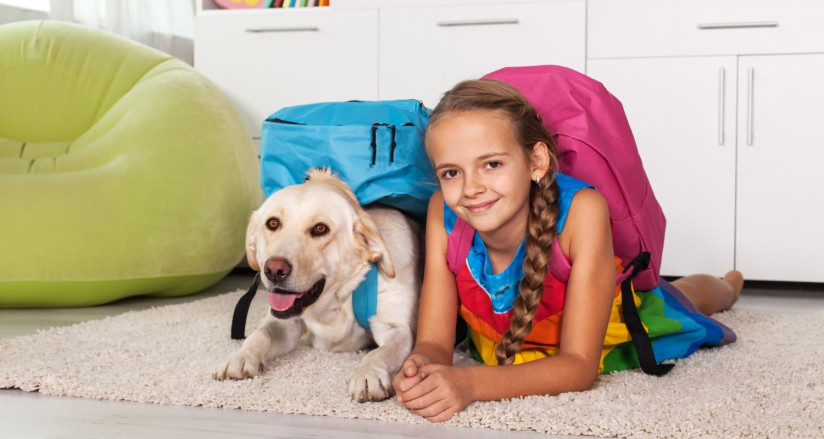
Summary: Helping your dog adjust to the school-year routine takes gradual changes, consistent structure, and plenty of mental stimulation. Preparing your dog before school starts can reduce separation anxiety, boredom, and unwanted behaviors.
Bark Busters’ Key Points:
- Gradually increase alone time before the school year begins.
- Reduce attention and interaction to help your dog adjust to a quieter home.
- Use food puzzles, treats, and quality toys to provide mental stimulation.
- Create a safe, comfortable space where your dog can relax while home alone.
- Teach children to give dogs time to settle when they return home.
- Consistent training and clear communication help dogs adapt to new routines.
As summer ends and the school year begins, dogs and families must adjust to new routines. Sudden changes can be stressful for dogs, who thrive on consistency and familiar habits. Longer periods alone and schedule changes can cause stress, separation anxiety, and unwanted behaviors. With consistent dog training, structure, exercise, and mental stimulation, you can help your dog adjust to the school-year routine.
How to Prevent Dog Separation Anxiety When Kids Go Back to School
Dogs may struggle when they go from constant companionship to spending more time alone, leading to separation anxiety, barking, or destructive behavior. Fortunately, simple solutions can help your dog adjust to the new routine. Gradually adjusting their routine can make the transition easier.
- Start early. A couple of weeks before school begins, gradually get your dog used to being alone for longer periods. For example, if you usually bring your dog along on errands, start leaving them at home to help them adjust to the upcoming routine.
- Gradually reduce attention. When the whole family is home, dogs are often the center of activity. About a week before school starts, begin giving your dog shorter periods of attention. Gradually increase these breaks each day to help them adjust to spending more time alone.
How to Keep Your Dog Entertained While You're Away at School
Dogs need mental stimulation throughout the day, especially when they’re home alone. Simple activities like food-based games and engaging toys can help keep your dog entertained and prevent boredom while you’re away.
- Scatter food. Dogs are natural foragers and enjoy searching for food. Consider hiding small treats or use a treat-dispensing toy to keep your dog engaged while you’re away. Always provide fresh, clean water to keep them hydrated.
- Provide quality toys. Dogs love toys, but they can quickly become bored with or destroy them. Invest in sturdy, high-quality toys, especially ones that dispense treats. Be sure to rotate the toy selection every few days to help your pup maintain their interest in what is on hand.
How to Create a Safe Space for Your Dog During the School Year
Like humans, dogs crave a place where they can be relax and feel safe. Providing a secure space helps reduce stress when they’re alone.
- Crates or Doghouses. Dogs are den animals by nature, so a crate or doghouse can become a cozy, secure retreat. Begin crate training well before school starts to ensure your dog feels comfortable. Limit crate time to 8–10 hours for adult dogs and 4–6 hours for puppies. If your family will be gone longer, arrange for a friend or pet sitter to give your dog a break.
- Laundry room or small area. If accidents are a concern, consider confining your dog to a smaller area with an easy-to-clean floor, like vinyl or tile. Add a soft bed and a few toys to make the space comfortable and inviting.
Why Dogs Act Out After Being Left Alone and How to Stop It
Long periods alone can leave dogs stressed and full of pent-up energy. When kids come home from school, this excitement may lead to jumping, nipping, or other unwanted behaviors. Consistent training can help your dog stay calm during these reunions.
- Teach your kids. It’s not just dogs that need training! Help your children understand that your dog needs a few minutes to settle down after they get home. Have them ignore the dog for 5–10 minutes before giving attention. For younger children, an adult should supervise interactions to ensure safety.
- Train your dog. Consistent training helps your dog understand which behaviors are acceptable. Using positive reinforcement and clear communication can reduce stress and create a smoother transition to the new routine.
Help Your Dog Adjust With Professional Dog Training
Adjusting to a new school-year routine can be challenging for both dogs and their families, but with patience, planning, and consistent training, the transition can be smooth and stress-free.
If your dog struggles with separation anxiety, boredom, or behavior changes, Bark Busters is here to help. Our professional trainers specialize in in-home training tailored to your dog’s unique needs, helping them feel calm, confident, and well-behaved no matter the season.
Contact your local Bark Busters trainer today to schedule a session and give your dog the tools they need to thrive during the school year and beyond.
