

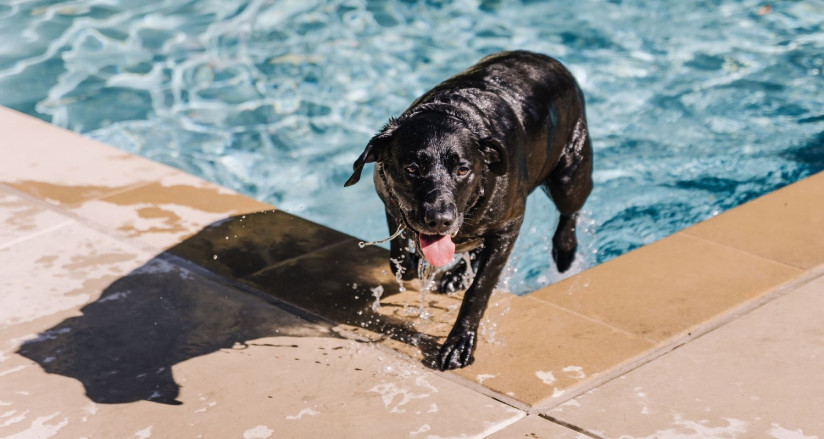
Summary: Learn how to keep your dog safe around pools and other bodies of water with simple training techniques and essential summer water safety tips.
Bark Busters' Key Points:
- Teach your dog to swim safely and find the pool steps.
- Train poolside manners and clear boundaries.
- Always supervise your dog and watch for signs of fatigue.
- Use a life jacket in deep water and rinse your dog after swimming.
- Professional dog training can help reinforce safe, confident behavior around water.
A dip in a swimming pool is the perfect way for your dog to exercise and beat the summer heat, but there are hidden dangers that may not be obvious to pet parents. Many dogs drown each year from avoidable pool accidents.
Is Your Dog a Good Swimmer? How Breed Affects Pool Safety
There are always exceptions, but short-tailed breeds (Boxers, Bulldogs, and Pugs) and most dogs with dense muscles and large heads (Pekingese, Staffordshire Bull Terriers, Bassett Hounds, Dachshunds) are not great swimmers. Always keep an eye on your dog of any breed around the pool and lock your pool gates when the dog is left unattended.
How to Teach Your Dog to Swim Safely
It’s important to teach your dog – puppies included – how to swim and safely exit backyard pools and other bodies of water. Dogs will typically try to exit water the way they came in, and inexperienced swimmers can even drown from exhaustion if they fall in while at play.
How to Introduce Your Dog to Swimming
Begin by offering treats and toys from the water’s edge, luring your dog closer to the water until they are ready to get their paws wet. In a kiddie pool, do this until your dog is happy to stand in a few inches of water; add more at each subsequent session until the water is as deep as you need it to be.
If your pet goes to the edge but isn’t ready to get in the water, try calling them into your arms, or simply pick them up and bring them in with you.
Do not proceed if you sense tension. If they remain calm, walk into the water with their head above the waterline. Speak in a soothing voice to help keep them relaxed.
Why You Should Never Force Your Dog Into the Water
Never throw, push, or drop your dog into the water. It can be startling and scary even to experienced swimmers, and create serious water phobias in inexperienced ones.
Teach Your Dog How Safely Exit a Swimming Pool
Your dog will instinctively try to exit a body of water from the point of entry. To teach them how to exit a pool:
- Attach a recall leash to their collar.
- Gently place your dog into the pool using the steps. Most dogs will naturally turn around and use the steps to get back out. Repeat this several times so they become familiar with the exit.
- Once your dog is comfortable using the steps, practice from different areas of the pool. Gently guide or place your dog in the water, then use the recall leash to encourage them toward the steps, providing as little assistance as possible.
- Continue practicing until your dog can confidently locate and use the steps from anywhere in the pool.
Even if your dog is an avid swimmer, it’s still a good idea to refresh their memory of the step location at least every four months.
How to Train Your Dog to Behave Around the Pool
Swimming is only one part of pool safety. Teaching your dog how to behave around the pool is just as important as teaching them how to swim. Some pet parents may only want their dog in the pool during certain situations, or not at all.
Start by observing your dog while someone is swimming so you can identify and address unwanted behaviors before they become habits.
Pool Training for Dogs: Teaching Boundaries and Safe Pool Behavior
Many dogs get easily distracted around pools, which can lead to unwanted behavior. Consistent training can help address these common poolside issues:
- Wait for Permission. Teach your dog to enter the pool only when invited, never on their own.
- Discourage Barking and "Lifeguarding." Some dogs bark, pace, chase swimmers, or jump into the water because they think they're helping. Training teaches them to stay calm and relax while people are swimming.
- Set Clear Pool Boundaries. If you don't want your dog in or around the pool except at certain times, consistent boundary training helps them understand where they're allowed to go.
Essential Summer Water Safety Tips for Dogs
Beyond knowing how to swim or exit the pool, dogs need a little extra care and attention to stay safe in and around the water. From spotting fatigue to preventing burns, these quick safety tips will help keep your dog safe whether you're poolside or at the lake.
How to Recognize Signs of Swimming Fatigue in Dogs
Swimming is great exercise for dogs, but it can be more exhausting than many pet parents realize. Unlike playing on land, where dogs can easily stop, lie down, and rest when they become tired, swimming requires constant movement to stay afloat. Since dogs often don’t know when they need to stop playing, it’s important to monitor their energy levels and provide regular breaks.
- Watch for Overexertion. Some dogs will keep chasing a ball or Frisbee long after they should stop because they don’t recognize when they are becoming tired, especially when excited or focused on play.
- Understand Why Swimming Is More Tiring. Swimming requires continuous effort to keep the body moving and afloat, making it just as tiring—or even more tiring—than playtime on land.
- Look for Signs of Fatigue. Watch for signs like flailing in the water, struggling to swim, slowing down, or losing interest in toys.
- Take Regular Breaks. Limit your dog’s time in the water and give them frequent opportunities to rest and recover.
Protect Your Dog's Paws and Skin During Summer Swimming
All dogs – especially those with light-colored coats – can experience sunburn, which can lead to skin cancer. Ask your veterinarian about pet-safe sunblock. Poolside surfaces can get extremely hot in the sun.
Dogs rely on the sweat glands in their paw pads to cool down and may become more susceptible to heatstroke on hot ground. Place the palm of your hand on the surface – if it feels hot to the touch, it’s too hot for your dog’s paws.
Why You Should Rinse Your Dog After Swimming
Rinse your dog off after a swimming session, as chlorine dries out skin and fur and can cause your pet to itch and scratch in discomfort. This is especially important after swimming in a lake, pond, or river to avoid ear mites, eye infections, and insects which can embed themselves into dog fur and hair.
When Your Dog Should Wear a Life Jacket for Swimming
A vet-approved life preserver for dogs is a useful accompaniment for excursions into deep, open waters. Practice in your pool so your dog becomes comfortable wearing, walking, and swimming in a lifejacket before moving on to bigger bodies of water.
Hot Tubs are Dangerous for Dogs
While hot tubs can be a great way for humans to relax, they are not safe for dogs. Dogs do not tolerate high temperatures the same way people do, and spending time in a hot tub can quickly lead to overheating, dehydration, or heat-related illness.
Prevent Accidents with Professional Dog Training
Whether your dog loves the water or is just learning to swim, the right training can help keep them safe and confident around pools, lakes, and other bodies of water. If you'd like personalized guidance or need help teaching your dog safe behaviors around the water, contact your local Bark Busters trainer. Our in-home dog training is tailored to your dog's unique needs, helping you build lifelong safety habits.
