

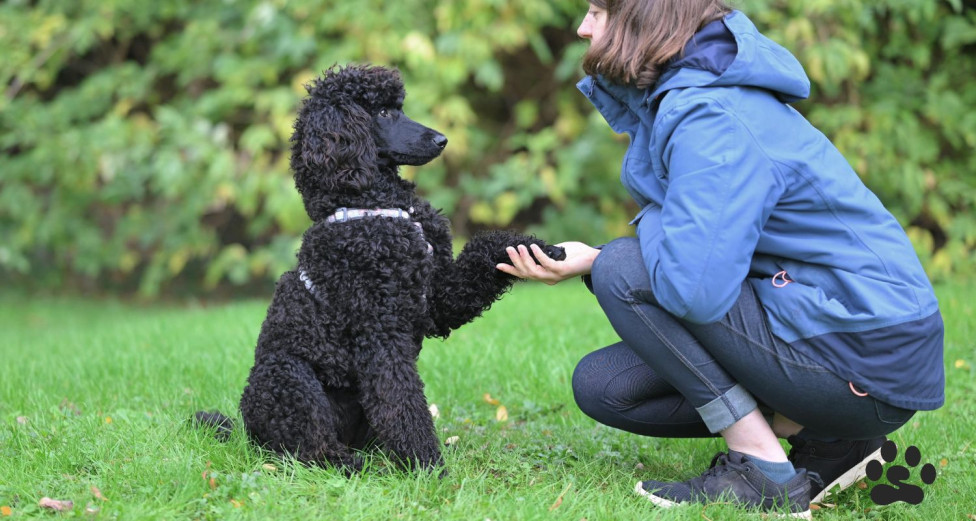
Summary: If you've ever wondered whether your dog can listen without seeing a treat first, the answer is yes. Dog training without treats isn't about withholding rewards—it's about building trust, clear communication, and calm leadership that works whether you're at home, walking through South San Francisco, or enjoying a weekend on the Peninsula.
- Learn why dogs don't need to depend on treats to learn good behavior.
- Discover how calm leadership creates lasting results.
- Get practical tips you can start using at home today.
- See how Bark Busters' in-home approach helps busy San Mateo County families.
Why Dog Training Without Treats Works Better Than Many Owners Expect
If your dog only comes when a treat appears, you've probably noticed the pattern. No snack? No response. It's a little like trying to negotiate with a toddler who expects ice cream every time they brush their teeth. Rewards absolutely have their place, but when they become the only reason a dog listens, they can unintentionally become the entire training system.
At Bark Busters, the goal isn't to eliminate rewards or affection. Quite the opposite. The goal is to create a relationship where your dog chooses to follow you because they trust your guidance—not because they're constantly checking whether you're carrying chicken in your pocket.
For busy professionals in South San Francisco, San Bruno, Burlingame, and throughout San Mateo County, that's especially important. Between hybrid work schedules, coffee runs, Zoom meetings, and weekend hikes, nobody wants to manage a dog that's constantly negotiating for payment.
Dogs Naturally Understand Leadership More Than Bribes
Dogs have communicated with one another for thousands of years without treat pouches. They naturally understand body language, timing, consistency, and calm leadership. This is the foundation of the Bark Busters philosophy.
Instead of relying on food to convince a dog to behave, we teach owners how to communicate in ways dogs instinctively understand. That creates confidence rather than dependency.
Training begins inside your home first. Why? Because if your dog can't calmly listen in the living room, expecting perfect behavior while walking past squirrels near Orange Memorial Park or along the Bay Trail is asking a lot. Success outdoors starts indoors.
A Few Simple Ways to Train Without Constant Treats
Dog training without treats doesn't mean training without encouragement. Far from it. Instead, focus on rewarding your dog with things they naturally value:
- Calm praise delivered at the right moment.
- Your attention and approval.
- Access to something they want, like going outside or greeting visitors.
- Consistency every single day.
- Clear boundaries followed by relaxation and affection.
Think of leadership like a GPS. Your dog isn't looking for someone handing out snacks every few minutes. They're looking for someone who knows where they're going.
Why Treats Sometimes Become the Problem Instead of the Solution
Treats can be wonderful. But they shouldn't become emotional support cookies. A common trend throughout the Bay Area's "positive-only" training culture is assuming every behavior can be solved simply by offering higher-value food. Sometimes that works. Sometimes it creates a dog that's constantly asking, "What's in it for me?" What happens when you forget the treats? Or when another dog owner at the park has bacon?
Dogs, like people, need encouragement. They also need clarity. Healthy relationships include kindness and boundaries. Parents know this. Teachers know this. Great managers know this. Dogs do too.
At Bark Busters, compassionate leadership and positive reinforcement work together without creating dependence on food rewards or using harsh punishment.
Life in South San Francisco Brings Plenty of Real-World Training Opportunities
Living in South San Francisco means dogs encounter lots of stimulation every day. Morning commuters. Neighborhood delivery trucks. Children riding scooters. Outdoor café patios. Weekend walks along Sign Hill. Friendly neighbors whose dogs somehow always seem to appear exactly when yours decides to bark.
These everyday moments become much easier once communication has been established inside the home. Because Bark Busters provides one-on-one in-home training, each lesson is customized around your dog's environment, routine, and specific challenges. That's far more effective than expecting every dog to succeed in the exact same group class.
We Asked Our Local San Mateo Dog Therapist, Jared Levenson, About Training Without Treats
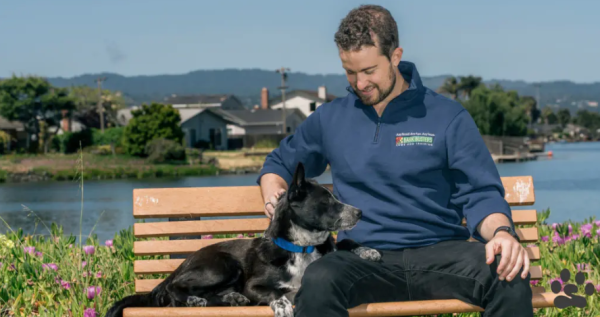
According to Bark Busters' local San Mateo behavior specialist Jared Levenson, lasting behavior change begins with understanding why dogs behave the way they do rather than simply managing the symptoms.
Raised on a Sacramento farmhouse where animals were truly part of the family—including one dog, thirteen cats, sheep, goldfish, and more—Jared developed an appreciation for animal communication from an early age.
His professional background is equally unique. Before becoming one of the Bay Area's highest-rated dog trainers, with hundreds of detailed five-star reviews across Google, Yelp, and Thumbtack, Jared worked with autistic children through Easter Seals, taught yoga for many years, earned a Master's in Counseling Psychology from Santa Clara University, and practiced as a mental health counselor in Half Moon Bay.
That blend of behavioral science, calm presence, and genuine compassion naturally aligns with the Bark Busters philosophy of helping dogs through communication rather than force.
Real Families Tell About Real Results
One local family struggled with a young rescue dog who completely ignored them whenever distractions appeared outside. Treats worked beautifully inside. Outside? Not so much.
Walks quickly became frustrating as squirrels, bicycles, and other dogs always seemed more exciting than the owner's pocket full of snacks. After working through the Bark Busters in-home program, the family shifted their focus toward calm leadership, clear communication, and consistent expectations inside the home before gradually expanding outdoors.
According to their online review, the difference wasn't just improved obedience. Their dog appeared noticeably calmer, more confident, and much easier to live with every day. Stories like these are common because the training addresses the relationship itself—not just individual commands.
The Long-Term Goal is Freedom, Not Food Dependency
Imagine walking through South San Francisco with your dog calmly beside you. No bargaining. No constant reaching into your pocket. Just relaxed communication. That's what sustainable training looks like.
The Bark Busters approach has helped dogs and families around the world for more than 30 years using natural canine communication, compassionate leadership, and practical coaching delivered where dogs learn best—their own homes.
Even better, Gold Service includes the Life of Dog Support Guarantee, providing ongoing help throughout your dog's lifetime should behavioral challenges ever return, even if your family relocates outside the immediate San Mateo service area.
Your Dog Can Learn Without Depending on Treats
If your dog only seems interested in listening when food appears, you're certainly not alone. The good news is that lasting change is possible. The local Bark Busters San Mateo team specializes in personalized in-home dog training that helps dogs build better behavior through trust, communication, and calm leadership—not constant negotiation.
Learn more by taking the free dog behavior quiz to better understand your dog's unique challenges. If you're ready for personalized guidance backed by ongoing lifetime support, call 1-877-500-BARK (2275) and discover how enjoyable life with your dog can become.