

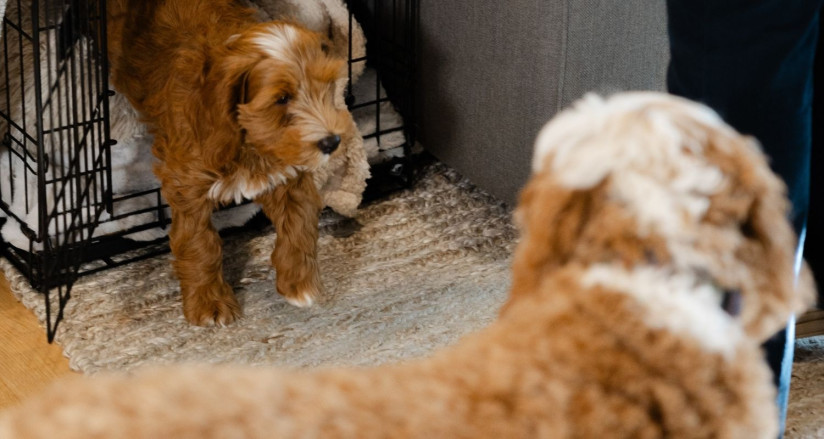
Summary: This quick guide helps dog owners introduce a new dog to their current dog by preparing the home, planning gradual introductions, recognizing body language, and managing interactions to build a safe, positive relationship.
Bark Busters' Key Points:
- Choose a compatible dog based on temperament and energy level.
- Prepare separate food, toys, beds, crates, and safe spaces before bringing the new dog home.
- Introduce dogs gradually on neutral territory before bringing them into the house.
- Watch body language and give dogs more space when they show signs of stress or discomfort.
- Use calm leadership, consistent routines, supervision, and management to prevent conflict.
- Give puppies and adult dogs short, controlled interactions and plenty of opportunities for breaks.
- If ongoing tension, resource guarding, or fighting develops, professional guidance can help.
Bringing a new dog home is exciting, but it can also be a major adjustment for your resident dog. A thoughtful introduction helps reduce stress, prevent conflict, and create the foundation for a positive relationship.
Every pair of dogs is different. Some become companions quickly, while others need weeks of patient management. Your role is to provide calm leadership, manage the environment, and guide interactions so both dogs feel safe and successful.
How to Choose a Compatible Dog for Your Dog
Temperament—not breed or size—is the most important factor in compatibility, so try to match energy levels whenever possible; high-energy dogs often do best with other active dogs, while older or calmer dogs may be overwhelmed by a boisterous puppy.
Opposite-sex pairings generally tend to coexist more harmoniously, while two female dogs are statistically more likely to experience conflict. Regardless of the pairing, spaying or neutering can help make the adjustment process smoother.
Preparing Your Home for a New Dog
A little preparation can make the transition much smoother.
- Learn as much as possible about each dog’s personality, history, energy level, and comfort around other dogs.
- Ensure both dogs are healthy and up to date on vaccinations.
- Prepare separate food bowls, beds, toys, crates, and resting areas.
- Remove high-value items such as bones, chews, and favorite toys before the first introduction.
- Plan for gradual introductions rather than giving the new dog unrestricted access to the home immediately.
Crates Can Make the Transition Easier
Each dog should have their own crate in the same room or area. Crates provide a secure retreat and make management much easier during the adjustment period.
Use crates proactively, not as punishment, so dogs learn to view them as safe, comfortable spaces.
Introduce Your Dogs Before Bringing the New Dog Home
Whenever possible, introduce the dogs on neutral territory outside before bringing them into your home.
- Have a separate handler for each dog.
- Use loose six-foot leashes.
- Remain calm and relaxed—dogs often mirror our emotions.
- Begin by walking the dogs side-by-side in the same direction several feet apart.
- Allow the dogs to notice one another naturally while moving together.
- Avoid forcing face-to-face greetings.
- If both dogs appear relaxed, allow a brief sniff, then calmly move apart again.
- Use simple cues such as “sit” or “let’s go” as you move away to redirect attention and reinforce calm behavior.
Several short interactions are usually more successful than one long meeting. If you have multiple resident dogs, introduce them individually rather than all at once. Group introductions can overwhelm a new dog.
How to Bring a New Dog Into Your Home After an Introduction Outside
- Place your resident dog in another room or behind a barrier.
- Allow the new dog to enter and calmly explore the home.
- Reintroduce the dogs gradually while supervising closely.
Managing Your Dogs During the First Few Weeks
Use baby gates, crates, or barriers to create separate spaces when needed.
- Supervise all interactions.
- Feed dogs in separate rooms or crates.
- Pick up food bowls immediately after meals.
- Allow older or less mobile dogs to eat without competition.
- Continue limiting access to high-value toys and chews.
- Provide duplicates of favorite toys and enrichment items.
Help your dogs build positive associations through shared walks, simple training exercises, rewarding calm behavior, daily individual attention, and consistent routines for feeding, exercise, and rest.
Reserve high-value items like bones, bully sticks, and special chews for times when the dogs are separated. Management is not a failure, but a way to prevent conflict while trust develops
Dog Body Language: Signs of Comfort and Stress
Signs Your Dogs Are Comfortable With Each Other
- Loose, relaxed body posture
- Soft eyes and relaxed facial expressions
- Curved approaches
- Play bows
- Sniffing the environment
- Calm curiosity
- Looking away and disengaging easily
Signs Your Dogs Need More Space
- Stiff body posture
- Hard staring
- Raised hackles
- Lip lifting or growling
- Repeated barking directed at the other dog
- Lunging
- Inability to disengage or calm down
If either dog shows signs of discomfort, calmly create distance and try again later, there is no benefit to rushing introductions. Until both dogs are consistently comfortable together, always supervise their interactions, use crates or barriers when needed, and let the more cautious dog set the pace.
How to Introduce a Puppy to an Adult Dog
Adult dogs often appreciate puppies in small doses.
- Keep early interactions brief.
- Supervise all play.
- Give the adult dog opportunities for quiet breaks.
- Never force interaction.
- Watch for signs that either dog needs space.
- Reward calm, polite behavior from both dogs.
Remember that puppies are still learning social skills and often need guidance to respect boundaries.
How to Help Your Dogs Adjust to Living Together
Dogs benefit from clear, calm guidance during major life changes. Consistent leadership helps both dogs feel secure and understand expectations. Set clear boundaries, interrupt inappropriate behavior early, reward calm choices, and prevent situations that could lead to conflict.
Most importantly, stay calm and confident, as dogs often take cues from your emotions and actions. Rather than allowing disagreements to escalate, guide your dogs toward appropriate behavior and successful interactions.
What to Do If Your Dogs Are Fighting or Experiencing Conflict
Some tension during the adjustment period is normal, but frequent or escalating conflict often indicates the need for clearer guidance and more structured management. Make sure each dog receives individual exercise, attention, and training to help maintain harmony in the home.
Every household and dog is different. If you’re experiencing ongoing tension, anxiety, resource guarding, or conflict, your Bark Busters trainer can create a personalized in-home training plan.
